“I can see people, but they look like trees, walking.”
“I can see people, but they look like trees, walking.”
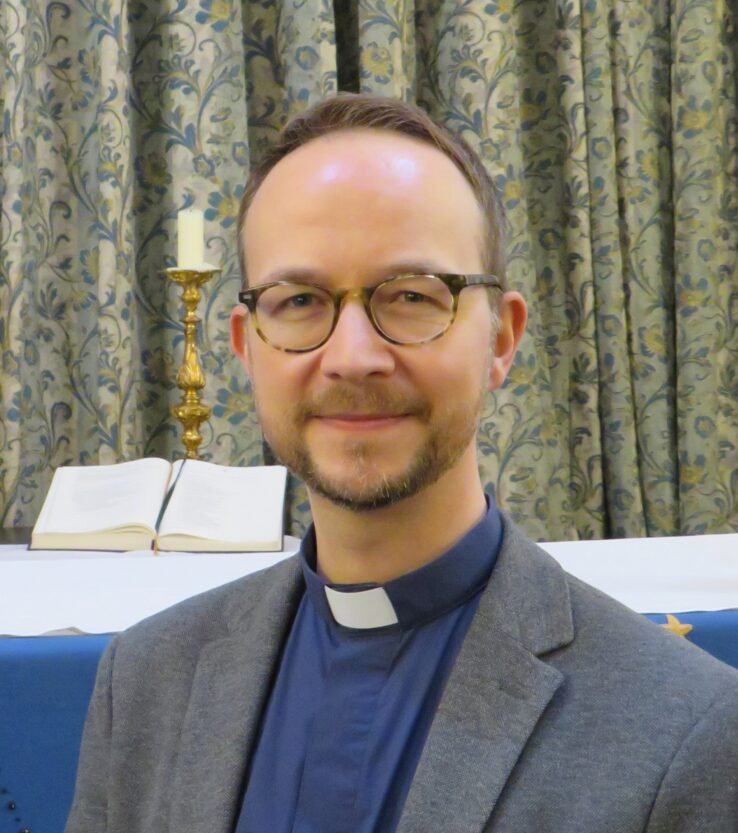
Todays reflection comes from Pastor Sebastian. Pastor Sebastian was born in Germany, made in England, and at home in London, he serves both the English-speaking congregation of St Anne’s Lutheran Church and the German-speaking congregation of St Mary’s with St George’s. Ordained in 2024, he combines his ministry with work as Associate Professor/Reader in Ancient and Comparative Literature & Literary Theory at King’s College London.

They came to Bethsaida. Some people brought a blind man to him and begged him to touch him. He took the blind man by the hand and led him out of the village, and when he had put saliva on his eyes and laid his hands on him, he asked him, “Can you see anything?” And the man looked up and said, “I can see people, but they look like trees, walking.” Then Jesus laid his hands on his eyes again, and he looked intently, and his sight was restored, and he saw everything clearly. Then he sent him away to his home, saying, “Do not even go into the village.”

“I can see people, but they look like trees, walking.” Most mornings, my commute takes me across London Bridge to the university and the church where I work. During the morning rush hour, approaching from further away, people shrink into dots that stream from one side of the river to the other, like ants. The sight often reminds me of lines from T. S. Eliot’s The Waste Land:
Unreal City,
Under the brown fog of a winter dawn,
A crowd flowed over London Bridge, so many,
I had not thought death had undone so many.
Sighs, short and infrequent, were exhaled,
And each man fixed his eyes before his feet.
Real people, all of them, for sure, but all so caught up in the big machinery of the city that they appear to be less than that; and more like a force of nature. A city such as London, and the City in particular, can do that to people. It is real and unreal at the same time. It can strip away our awareness of how distinctive and precious every individual person is. The hustle and bustle let us experience other people like an undifferentiated crowd that gets in our way, irritates us, or threatens to overwhelm us. There is a certain blindness at work here, too—and it takes straining, serious straining, to restore our vision to sight. Tellingly, even after the touchingly intimate act of putting saliva on the blind man’s eyes, it still takes Jesus two attempts to get them truly opened. Perhaps there is a part of us that would rather not see people all that clearly, that is quite content to let them blur into an undifferentiated mass that we then do not have to engage with. As you wander the streets of your city, town, or village this Lent, look out for how you are looking at those around you: “Can you see anything?”


Comments